- Role
- Brand & product designer
- Tools
- Figma, Blender
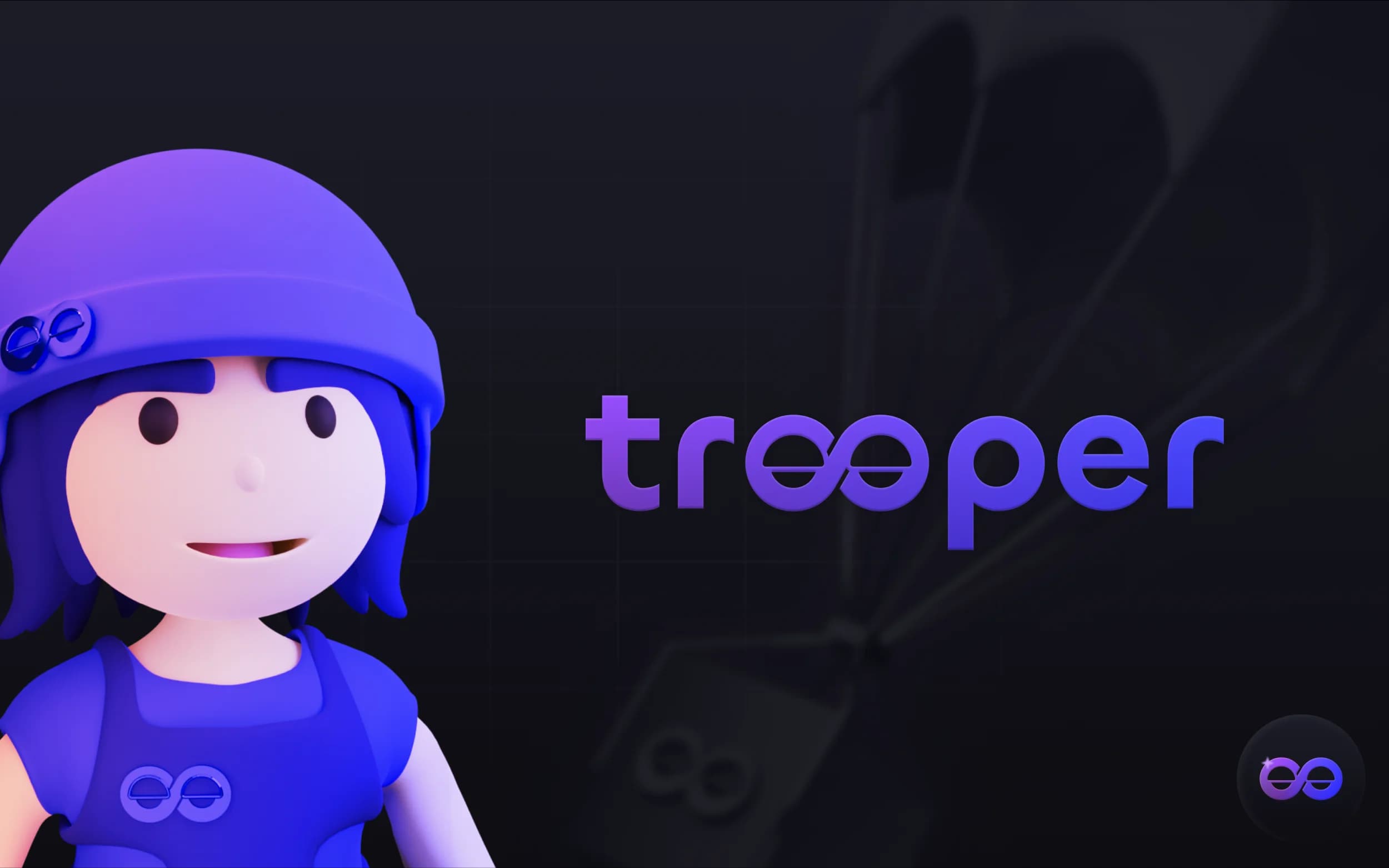
Trooper connects gamers, guilds and studios in the play-to-earn economy. Companies post paid missions, players apply with a profile that proves what they can do, and a smart-contract escrow makes sure everyone gets paid. I designed the brand, the 3D mascot and the whole product, from first wireframes to polished UI.
How do you build trust between strangers on a blockchain job market, without asking gamers to read a whitepaper?
The goals
- 01Give Trooper a bold, memorable identity, personified by a 3D mascot.
- 02Shape the platform around how the gaming industry actually hires: missions, players and guilds.
- 03Let profiles do the matching, with skills, badges and track record readable at a glance.
- 04Make payments trustless with an escrow that acts as a neutral third party.
- 05Weave the Trooper token into the product's economy without turning it into a barrier.
What I delivered
- Logo & visual identity
- 3D mascot
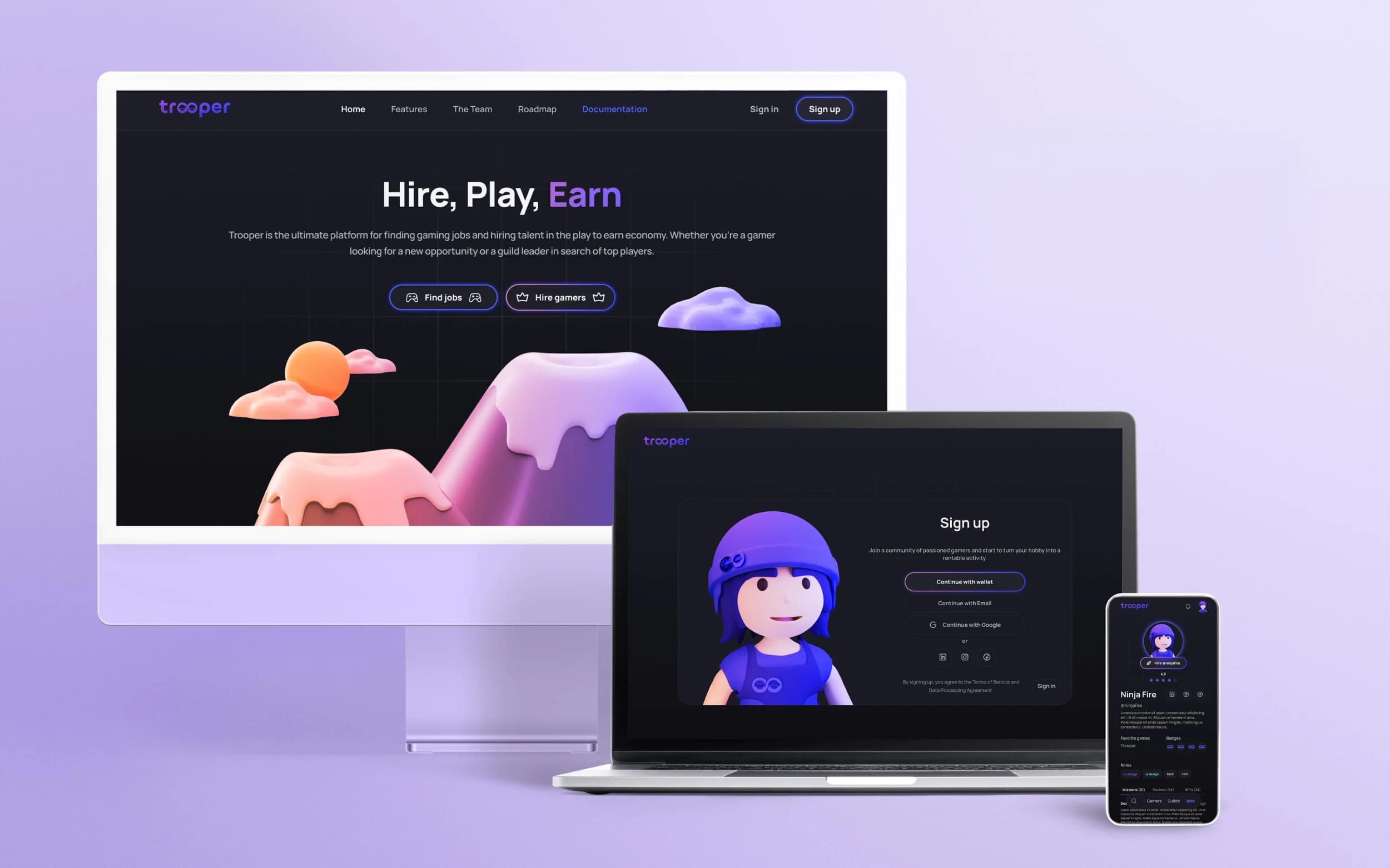
- Landing page
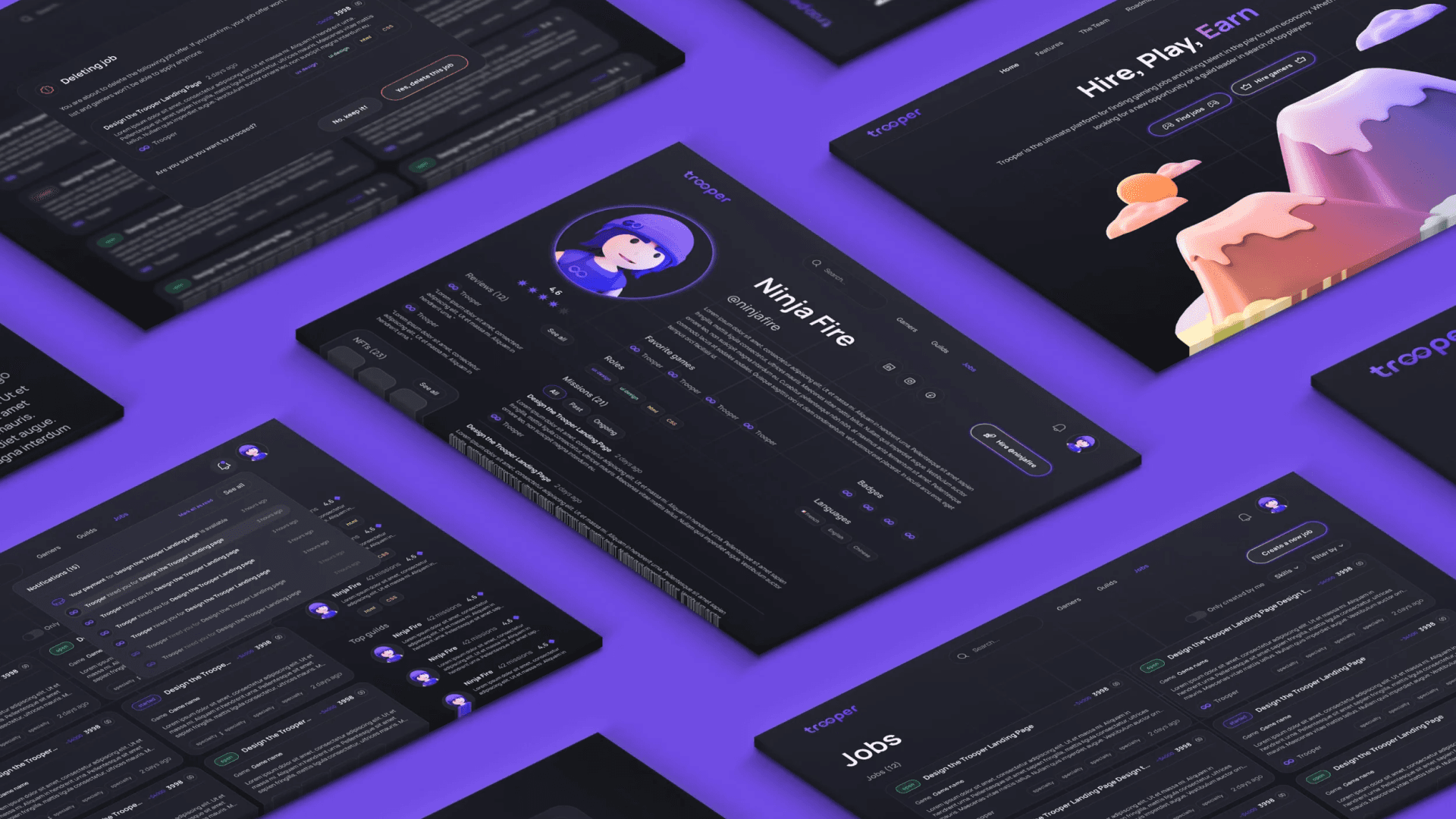
- Web app UX/UI
- branding
- logo design
- ux/ui design
- 3D design
The brief
The challenges
- 1
How might we create an intuitive platform that seamlessly connects gamers and gaming professionals?
- 2
How might we implement a blockchain-based escrow system that ensures secure and efficient transactions?
- 3
How might we incorporate gamification elements that engage users and build trust within the community?
How I got there
The process
- 1
Define
Trooper started as an ambitious idea: a place where gamers find paid work in the play-to-earn market, and where studios find skilled players and developers. Before drawing anything, I mapped what the product had to get right:
- Branding
- A unique identity that speaks to gamers and studios alike.
- User profiles
- Profiles rich enough to hire from, for players and professionals.
- Job listings
- Posting and applying in a few steps, with no friction.
- Escrow
- A secure, blockchain-based escrow for every payment.
- Gamification
- A reputation system that builds trust and keeps people engaged.
Research covered the target audience, the competitive landscape and the latest trends in blockchain and pro gaming. Workshops with the founders kept the vision and the product goals aligned from day one.
- 2
Design
- Branding
- A bold, futuristic identity that reflects both the innovation of blockchain and the excitement of gaming. Logo, typography and color were chosen to stand out in a crowded, noisy space, and the 3D mascot gives the brand a face players remember.
- User profiles
- Profiles act as a player's CV: skill badges, past missions, favorite games, and achievements verified through gaming platforms and in-game rewards.
- Job listings
- Studios list a mission in minutes, and players find the right one with search and filters designed for how gamers actually look for work.
- Escrow
- When a studio posts a job, its funds are locked in a smart contract. Players know the money is there before they start. As a bonus, Trooper can stake the locked funds and earn interest, which adds value for companies.
- Gamification
- Completed jobs and positive feedback earn badges and XP. Reliability becomes visible at a glance, which is what trust looks like between strangers.
- 3
Refine
- User testing
- Several rounds of testing showed where the experience held up and where it didn't, and fed straight back into the design.
- Iterations
- Each round sharpened the interface: better search and filters, and clearer review and reputation signals.
- Polish
- A final pass on consistency and detail across every screen, so the product felt as strong as the brand.
The work
What testing revealed, and how I fixed it

Studios couldn't tell applicants apart
The problem
Studios hiring several players for one mission struggled to filter applications. XP and badges alone weren't enough to separate a reliable player from a lucky one.
The fix
I added detailed reviews with comments for each player, so studios can read what previous employers thought. Badges were reworked to surface specific skills and achievements instead of a generic score.

Will anyone see my job post?
The problem
Early users worried that a brand-new platform wouldn't attract enough gamers to their missions.
The fix
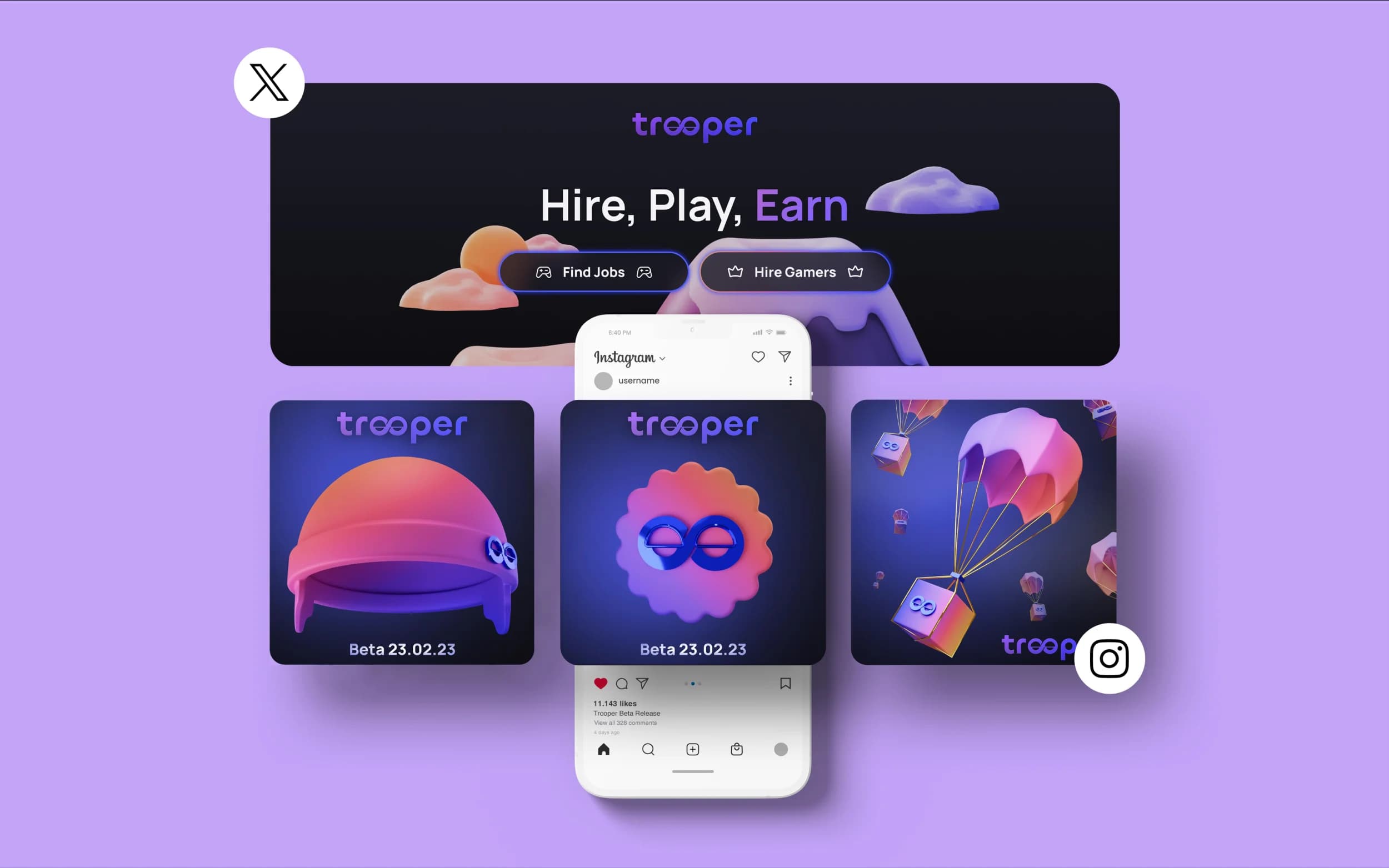
One-tap sharing of any job post to social media. Every studio becomes a distribution channel, and listings reach players far beyond the platform.

Finding anything took too long
The problem
Users wanted a single place to search for gamers, guilds and jobs. Without it, finding a specific profile or opportunity meant hunting through separate sections.
The fix
A global search across the whole platform, with filters for skills, game genres, job types and guild specialties. Results from every category show up on one page that's easy to scan.